The Training and Placement Cell of Bajaj Institute of Technology (BIT), Wardha, organised a guest session on ‘Career Opportunities at Bhabha Atomic Research Centre (BARC)’ on 18 November 2026, wherein eminent scientists Dr. N. N. Meeravali and Shri Vibhav Mani Tripathi from Bhabha Atomic Research Centre addressed the students. Final-year students from all four branches—Civil, Computer, Electrical and Mechanical Engineering—attended the session to gain insights into career opportunities in one of India’s premier nuclear research and development institutions.
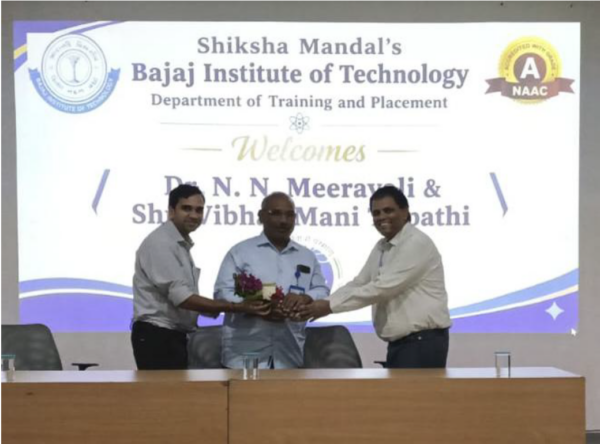
The programme commenced with a floral welcome of the guests by Dr. K. D. Joshi, Head, Training and Placement Cell and Associate Professor, Electrical Engineering, BIT. During the session, Shri Vibhav Mani Tripathi familiarised students with the remarkable contributions and achievements of BARC over the years, highlighting its diverse areas of research and technological activities. Through informative presentation and videos, he showcased the organisation’s significant work and its contribution to national development, inspiring students to consider BARC as a prestigious and rewarding career destination.
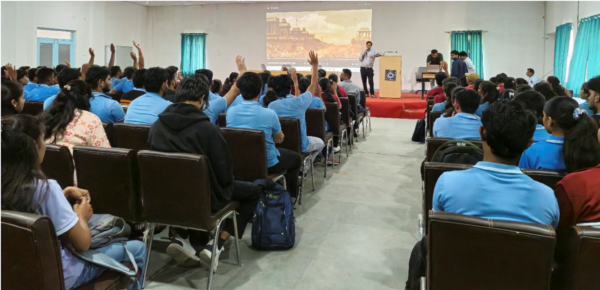
Subsequently, Dr. N. N. Meeravali provided detailed insights into the various career opportunities available at BARC and explained its recruitment process. He shared valuable recruitment statistics, including state-wise application figures and the final cut-off scores of selected candidates across different streams. He particularly emphasised that BTech graduates have good opportunities for selection and encouraged students to apply for relevant openings at BARC as well as other opportunities offered by the Department of Atomic Energy (DAE).
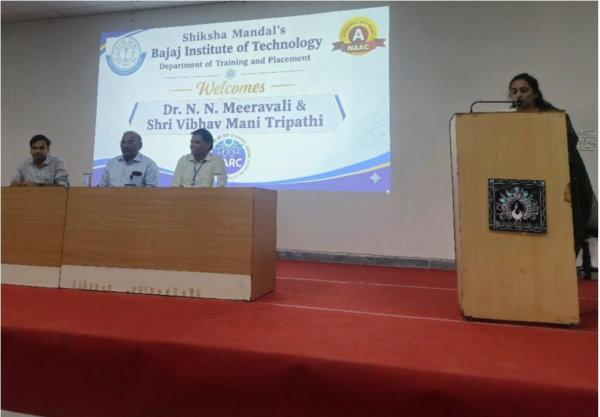
The session was compered by Ms. Kirti Madan, Assistant Professor, BIT, while Dr. K. D. Joshi proposed the vote of thanks. The departmental training and placement coordinators and teaching faculty at BIT Mr. Sunny Gandhi, Mr. Vikas Ravekar and Dr. Pawan Chandak also worked diligently behind the scenes ensuring the smooth conduct of the program. The interaction provided students with valuable first-hand information about careers in scientific research, national institutions, and opportunities in the Department of Atomic Energy.